Youth Soccer Equipment: What Your Child Actually Needs for the Season
 Reviewed by Roman PivarnikUEFA Pro Licence · Technical Director, Slovak FA
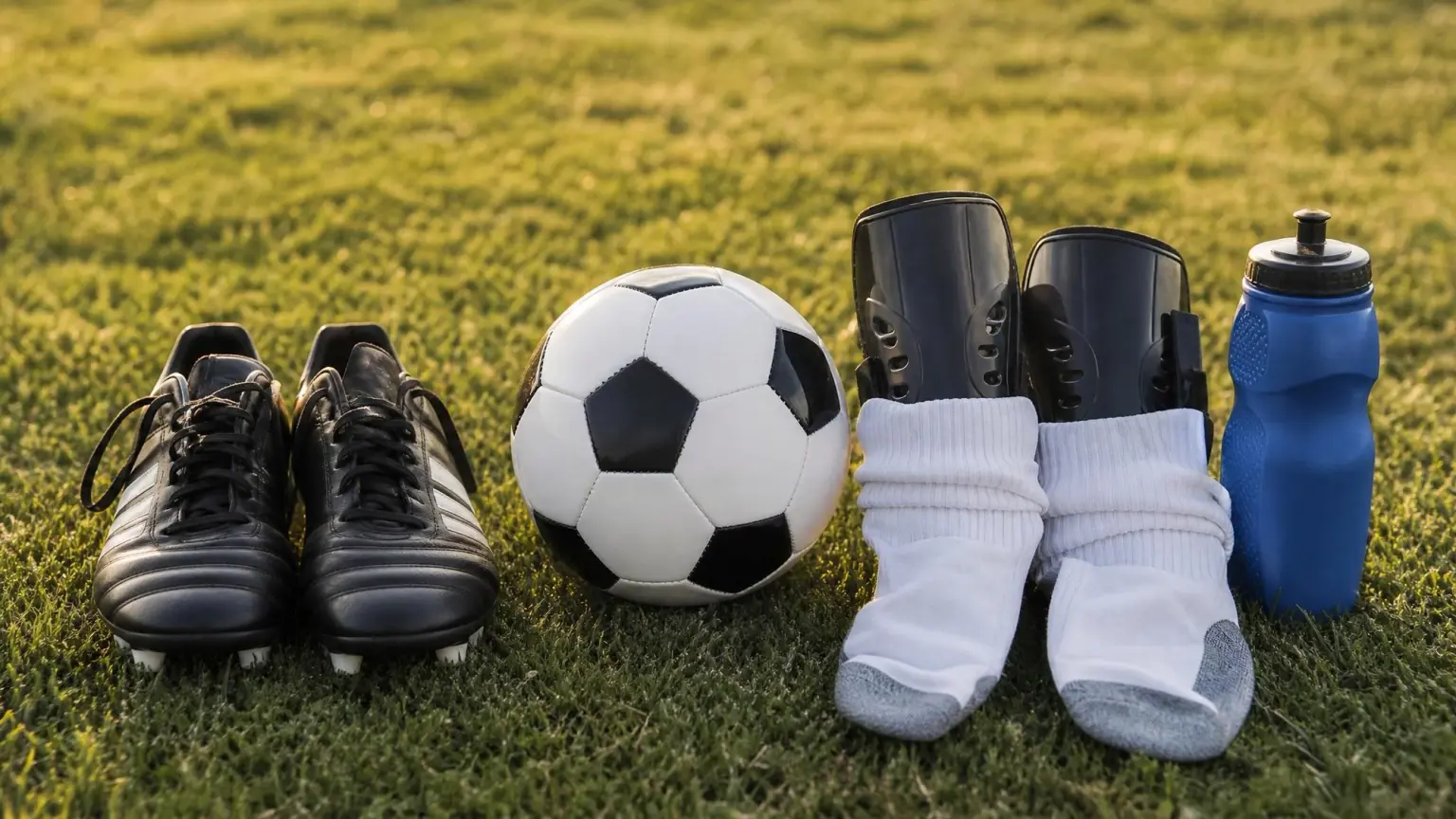
The required kit for youth soccer is shorter than the sporting-goods store wants you to think: cleats, shin guards, socks tall enough to cover the shin guards, a size-appropriate ball, and a water bottle. That's it. A player can train and play a full season on that list. Everything else — training aids, rebounders, branded backpacks, agility ladders — is optional, and most of it is optional for a reason.
With fall tryouts and preseason starting, here is exactly what your child needs, how to size the one piece parents get wrong most often (shin guards), and what you can safely skip.
What does a youth soccer player actually need?
Here is the whole list, split into what a player genuinely needs and what's merely nice to have.
| Essential | Nice to have | Skip unless asked |
|---|---|---|
| Cleats that fit | A second pair of socks | Agility ladders |
| Shin guards | Sliders/base-layer shorts | Rebounder nets |
| Tall socks | A dedicated soccer bag | Ankle braces (without a reason) |
| A size-appropriate ball | A ball pump | "Speed" parachutes |
| A refillable water bottle | Weather layers | Pro-priced boots |
The essentials column is the entire requirement. If you buy only those five things in the correct sizes, your child is fully equipped for practice, tryouts, and games.
What soccer equipment is actually required by the rules?
Soccer's rulebook — the IFAB Laws of the Game, which nearly every US youth league adopts — is specific here. Law 4 lists exactly five items of compulsory equipment: a shirt with sleeves, shorts, socks, shinguards, and footwear.
Shin guards are the only piece with their own material and fit rules. The Law states they "must be made of a suitable material and be of an appropriate size to provide reasonable protection" and must be "covered by the socks," and it puts the responsibility for size and suitability on the player. A referee will check for them during the pregame equipment inspection, and a player without them doesn't play. That's why the socks on the checklist need to be tall — they exist partly to cover the guards. What the Laws say about everything else your child might turn up in — earrings, a cast, glasses, cold-weather layers — is a separate question, covered in our guide to what players can and can't wear in a game.
The rest of the required list your child almost certainly already owns. The ball, water, and bag aren't "required" by the Laws, but no youth session runs without them.
How do you size youth soccer shin guards?
This is the piece parents most often get wrong, usually by grabbing whatever's on the peg at the sporting-goods store. Shin guards are protective equipment, so fit matters more than the label on the package.
Start with the fit test, not the size chart. A shin guard is the right length when:
- The top sits roughly one to two inches below the kneecap — not jammed into the back of the knee.
- The bottom ends about one inch above the ankle bone, so it doesn't dig in when your child runs.
- It covers most of the shin bone — retail fitting guides target roughly 70–80% of the shin — and doesn't slide side to side once the sock is over it.
If a guard hits both ends of that range and stays put, it fits, regardless of what size letter is on it.
Height is a starting point, not a rule. Manufacturers size guards by player height, but the bands vary noticeably between brands — one chart's "Small" is another's "Medium." As a rough guide, retail size charts tend to land around:
| Player height | Typical size |
|---|---|
| Under 4'7" | Youth XS |
| 4'7" – 4'11" | XS |
| 4'11" – 5'3" | Small |
| 5'3" – 5'7" | Medium |
| 5'7" – 5'11" | Large |
Treat that as a place to begin, then confirm with the fit test above and the specific brand's own chart. Because the ranges overlap and disagree, the measurement on your child's leg beats the number on the box every time.
Two rules that save money and frustration:
- If your child is between two sizes, size down. An oversized guard rides up, spins around the leg, and leaves the lower shin exposed — the opposite of protection. The smaller one that stays put protects better.
- Re-check every season, and again mid-season during a growth spurt. A growing player often needs new guards every six to twelve months, well before they're worn out.
Slip-in guards or the ankle-sock style for younger kids?
For U6–U10 players, the all-in-one style — a sock sleeve with the guard sewn in, sometimes with a wraparound ankle pad — is the practical choice: nothing to strap, nothing to lose, and it can't slide. Older players usually move to slip-in guards held by a sleeve or compression stay, which are lighter and less bulky. Either style is legal as long as it's covered by the sock.
Over or under the socks?
Under. Law 4 requires shin guards to be covered by the socks, which is also why game socks are tall. Pull the sock over the full guard; if the top of the guard pokes out, a referee can ask your child to fix it before play.
What about cleats?
Cleats are the other piece worth getting right, and they have enough nuance — toe room, stud types for grass versus turf, the metal-stud question — to deserve their own treatment. The short version: buy for a snug fit now rather than sizing up to "grow into," and match the studs to the surface your child plays on, with molded firm-ground (FG) studs the sensible default for natural grass.
We walk through all of it — the quarter-inch toe-room test, what FG/AG/TF/SG mean, and when metal studs are and aren't allowed — in our full guide to how soccer cleats should fit. If you're buying one thing carefully this season, make it the cleats.
What size soccer ball does my child need?
Ball size is set by age group, and using the wrong one makes every drill harder than it should be. The US Youth Soccer standard that clubs and rec leagues follow:
| Ball size | Age group |
|---|---|
| Size 3 | Age 8 and under (roughly U6–U8) |
| Size 4 | Ages 9–12 (roughly U9–U12) |
| Size 5 | Age 13 and up |
You don't need the expensive match ball — a mid-range training ball in the right size, kept properly inflated, is all a developing player needs. Our soccer ball size guide breaks down inflation, materials, and what's worth paying for.
What should your child bring to every practice and game?
Once the gear is sorted, the pack itself is simple. A ready-to-go soccer bag holds:
- Cleats and shin guards (guards inside the socks so they don't get left behind)
- A full refillable water bottle — hydration is the single most-forgotten item, and it matters more than any accessory, especially in late-summer heat. Our youth soccer heat safety guide covers how much and how often.
- The right ball, inflated
- A weather layer — a light rain jacket or a warm top for early-morning fall sessions
- A small snack for tournament days with back-to-back games
Pack it the night before. A calm player who has everything plays better than one who spent the car ride hunting for a missing shin guard.
What you don't need to buy
Most of the "essential training equipment" marketed to soccer parents does very little for a young player's development. Agility ladders, parachutes, and rebounders look productive but rarely translate to on-ball skill. Ankle braces shouldn't be a default purchase either — they're for a specific injury history, on medical advice, not for every player.
And you don't need professional-grade anything. Elite cleats and match balls are built for adults on perfect surfaces, not for a ten-year-old who will outgrow the pair in six months. Spend on correct sizing and safe protection; skip the badge.
What actually develops a player is time on the ball — thousands of quality touches — not gear. FlickTec's daily guided sessions, built on a methodology from Coach Roman Pivarnik (UEFA Pro Licence), need nothing more than a ball, a small space, and shin guards and cleats that fit. If your child is heading into tryouts, that's where the preparation should go.
Frequently Asked Questions
What equipment does a kid need to play soccer?
Five things: cleats that fit, shin guards, socks tall enough to cover the guards, a size-appropriate ball, and a refillable water bottle. That covers practice, tryouts, and games. Everything else — bags, training aids, extra layers — is optional convenience, not a requirement.
Are shin guards required in youth soccer?
Yes. Under Law 4 of the IFAB Laws of the Game, shin guards are compulsory equipment for every player, must be made of suitable material and an appropriate size, and must be covered by the socks. Referees check for them before kickoff, and a player without them isn't allowed on the field.
What size shin guards does my child need?
Fit matters more than the size label. The guard should sit about one to two inches below the kneecap, end roughly an inch above the ankle, and cover most of the shin. Brands size by height, but the bands vary, so measure your child's shin and check the specific brand's chart. If they're between sizes, size down so the guard stays put, and re-check every season as they grow.
Do you wear shin guards over or under your socks?
Under. The Laws of the Game require shin guards to be covered by the socks, which is why soccer socks are tall. Slide the guard against the shin and pull the sock over it completely — if the top pokes out, a referee may ask your child to fix it.
What should be in a youth soccer bag?
Cleats, shin guards tucked in the socks, a full water bottle, the correctly sized ball inflated, a weather layer, and a small snack for long tournament days. Pack it the night before so nothing gets left behind on the way out the door.