What Should a Youth Soccer Player Eat Before and After Training?
 Reviewed by Roman PivarnikUEFA Pro Licence · Technical Director, Slovak FA
Youth soccer players should eat a balanced meal of carbohydrates and protein 2 to 3 hours before training, a light snack 30 to 60 minutes before if needed, and a recovery meal combining carbohydrates and protein within 30 to 60 minutes after training. The most important nutritional factor for young athletes is consistent hydration throughout the day, not just during practice. Proper fueling before and after training directly affects energy levels, concentration, recovery speed, and long-term development.
Most parents know nutrition matters for young athletes but are not sure what to feed their child or when. The timing and composition of meals around training can make a noticeable difference in how a player performs and recovers. This does not require special supplements or complicated meal planning. It requires simple, consistent habits with real food.
What should youth soccer players eat before training?
2 to 3 hours before: a balanced meal
The pre-training meal should provide sustained energy without feeling heavy. The focus is on carbohydrates (the body's primary fuel for soccer), moderate protein, and low fat (which digests slowly and can cause discomfort during exercise).
Good pre-training meals:
- Pasta with tomato sauce and grilled chicken
- Rice with vegetables and lean meat or fish
- A turkey or chicken sandwich on whole wheat bread with fruit
- Oatmeal with banana, honey, and a handful of nuts
- A peanut butter and jam sandwich with a glass of milk
What to avoid 2 to 3 hours before: Heavy, high-fat meals (burgers, pizza, fried food). These take longer to digest and can cause sluggishness and stomach discomfort during exercise. Extremely high-fiber meals (large raw salads, heavy bean dishes) can also cause digestive issues during activity.
30 to 60 minutes before: a light snack (if needed)
If the player has not eaten in 3+ hours or feels hungry, a small, easily digestible snack can provide a quick energy boost.
Good pre-training snacks:
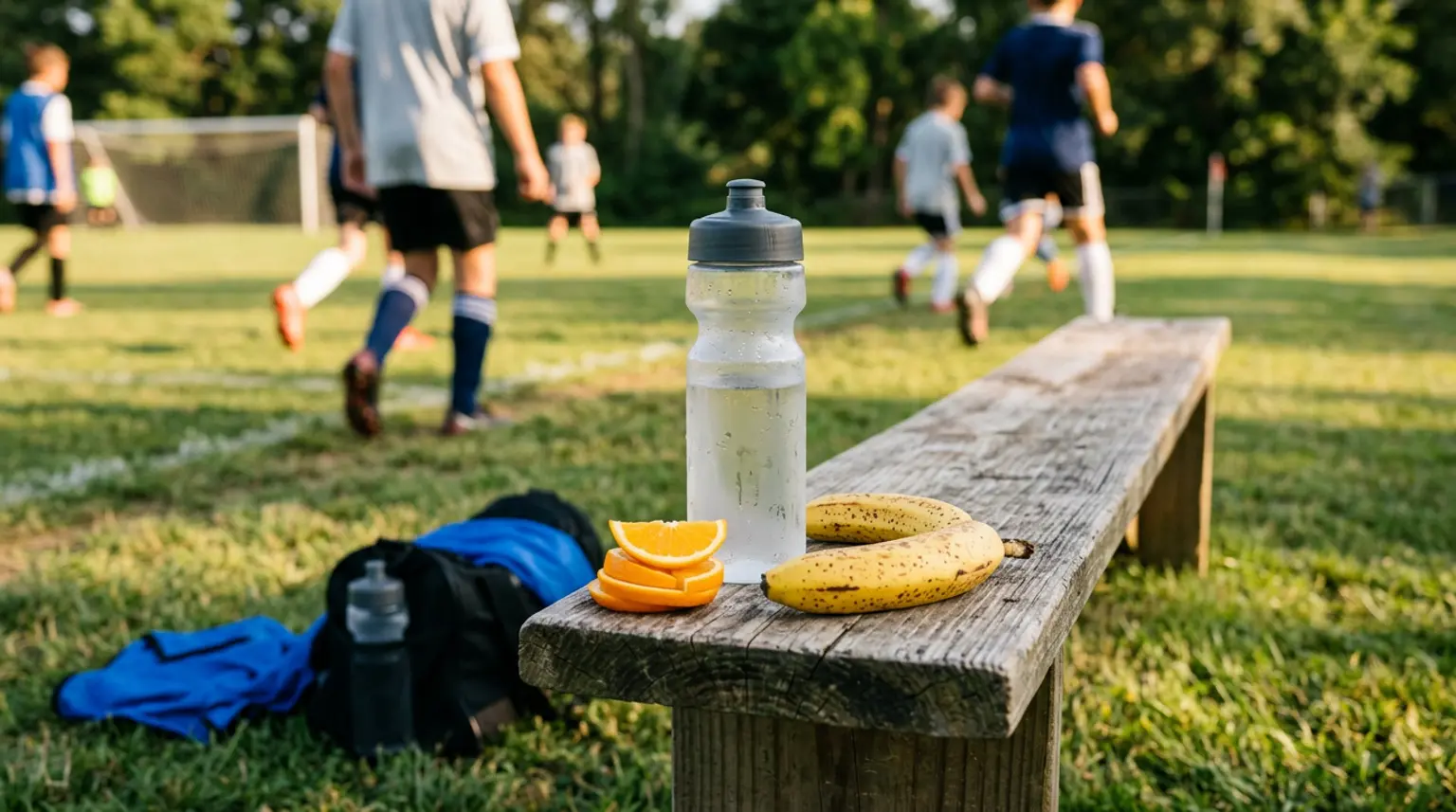
- A banana or apple
- A small granola bar
- A handful of crackers with a thin spread of peanut butter
- A small cup of yogurt
- A few orange slices
What to avoid close to training: Large portions, anything with high fat or fiber, sugary sodas and candy (which cause a quick spike followed by an energy crash).
What should youth soccer players eat after training?
Within 30 to 60 minutes: the recovery window
After training, the body needs two things: carbohydrates to replenish the glycogen (stored energy) used during exercise, and protein to repair the muscle tissue stressed during training. Eating within the first hour after exercise takes advantage of the body's heightened absorption rate during this recovery window.
Good post-training meals and snacks:
- Chocolate milk (genuinely one of the most effective recovery drinks, with an ideal ratio of carbohydrates to protein)
- A smoothie with fruit, yogurt, and a spoonful of peanut butter
- A chicken or turkey wrap with rice or whole wheat tortilla
- Scrambled eggs on toast with fruit
- Greek yogurt with granola and berries
- Pasta with meat sauce
The ratio to aim for: Roughly 3 to 4 parts carbohydrates to 1 part protein. For example, a banana (carb) with a glass of chocolate milk (carb + protein) covers both needs in a format most kids will happily eat.
Post-training is not the time for junk food
It is tempting to reward a hard practice with fast food or sugary treats. Occasional treats are fine, but making a habit of post-training junk food undermines recovery. The body is primed to absorb nutrients after exercise. Feeding it processed food instead of quality fuel wastes that recovery window.
How much water do youth soccer players need?
Dehydration is the most common and most preventable performance issue in youth soccer. Even mild dehydration (1 to 2 percent of body weight) reduces reaction time, concentration, and physical output. Youth athletes are more susceptible to dehydration than adults because they produce more heat relative to body size and are less efficient at sweating.
Before training: Drink 8 to 16 ounces of water 1 to 2 hours before. Another 4 to 8 ounces in the 15 minutes before kickoff.
During training: Drink 4 to 8 ounces every 15 to 20 minutes. Most youth coaches include water breaks at regular intervals. Players should drink even if they do not feel thirsty, as thirst is a delayed signal of dehydration.
After training: Drink 16 to 24 ounces within the first hour after training. If the player was sweating heavily, add a small amount of salt through food (a salty snack, a meal with seasoning) to replace sodium lost through sweat.
Water vs. sports drinks: For training sessions under 60 minutes, water is all that is needed. Sports drinks (Gatorade, Powerade) are useful for sessions longer than 60 to 90 minutes, particularly in hot weather, because they replace electrolytes and provide quick carbohydrates. For most youth practices, water is sufficient and healthier than the sugar content in sports drinks.
Do youth soccer players need supplements?
In almost all cases, no. A balanced diet that includes fruits, vegetables, whole grains, lean proteins, dairy (or alternatives), and adequate hydration provides everything a growing athlete needs. The supplement industry markets aggressively to young athletes and their parents, but for players under 16, real food is the best fuel.
One exception: Vitamin D may be beneficial for players who live in northern climates with limited sun exposure, particularly during winter. Consult a pediatrician before adding any supplement.
Protein shakes and powders are unnecessary for youth athletes. A child who eats regular meals with adequate protein (chicken, fish, eggs, dairy, beans, nuts) does not need additional supplementation. Whole food sources provide not just protein but also the vitamins, minerals, and fiber that powders lack.
What about nutrition on game day?
Game day nutrition follows the same principles as training day, with a few adjustments:
3 to 4 hours before the game: A full meal heavy on carbohydrates with moderate protein. This is the main fuel for the match. Pasta, rice dishes, or sandwiches work well.
1 to 2 hours before: A light snack if the player is hungry. Banana, granola bar, or toast with jam.
Halftime: Water. A few bites of an energy bar or orange slices if the player is hungry. Do not eat a full snack at halftime because it can cause cramping in the second half.
After the game: Recovery meal within 60 minutes. This is especially important after games because the physical demands are higher than training. Chocolate milk, a smoothie, or a full meal are all good options.
Tournament days (multiple games): Eating between games is critical. Small, frequent meals and snacks every 2 to 3 hours maintain energy across a full tournament day. Pack portable options: sandwiches, fruit, granola bars, trail mix, yogurt pouches. Avoid heavy meals between games.
How does nutrition affect training results?
A player who trains consistently but eats poorly will see slower improvement than a player who trains the same amount with proper nutrition. This is because recovery, which is when the body actually adapts and improves from training, depends on having the right fuel available.
Under-fueled training sessions produce less benefit because the body lacks the energy to perform at full intensity. A player who shows up to a home training session after skipping lunch will train with less focus and lower quality than one who ate properly.
Under-fueled recovery means the muscles repair more slowly, fatigue accumulates, and the risk of minor injuries increases. Over weeks and months, this gap in recovery quality adds up to a significant difference in development rate. Learn more about how to prevent injuries through proper training and recovery.
FlickTec's training methodology, designed by Coach Roman Pivarnik (UEFA Pro Licence, former UEFA Champions League coach), includes recovery sessions in the 500+ exercise library. Proper nutrition is the other half of the recovery equation. When paired with structured training and adequate rest, good eating habits accelerate the visible improvements that motivate young players to keep training. Explore soccer training for youth players aged 7 and up.
Frequently Asked Questions
Should youth soccer players eat differently on rest days?
Rest days do not require special eating. Maintain regular balanced meals. The body is still recovering and growing on rest days, so it still needs adequate nutrition. Slightly less food is natural since energy expenditure is lower, but do not restrict eating. Growing athletes need consistent fuel.
My child is a picky eater. How do I make sure they get enough nutrition for soccer?
Focus on the foods they will eat rather than fighting over the ones they will not. If they eat pasta, add chicken. If they like smoothies, blend in yogurt and fruit. If they refuse vegetables, fruit provides many of the same vitamins. A multivitamin can fill small gaps, but real food should be the priority. Do not turn meals into a battle.
Is it OK to train on an empty stomach?
Not ideal, especially for youth athletes. Training without fuel leads to lower energy, reduced concentration, and faster fatigue. If the player cannot eat a full meal before training, even a small snack (a banana, a handful of crackers) 30 minutes before is better than nothing.
How much protein does a youth soccer player need daily?
Youth athletes need approximately 0.5 to 0.8 grams of protein per pound of body weight per day. For a 90-pound player, that is roughly 45 to 72 grams daily. This is easily achieved through regular meals. A chicken breast (25g), a glass of milk (8g), yogurt (10g), and a peanut butter sandwich (10g) add up quickly without any special planning.
Nutrition does not need to be complicated for youth soccer players. Eat real food. Time meals around training. Stay hydrated. The players who fuel well recover faster, train harder, and develop more consistently.
For structured training sessions that include warm-up, skill work, and recovery, explore FlickTec for youth players aged 7 and up.