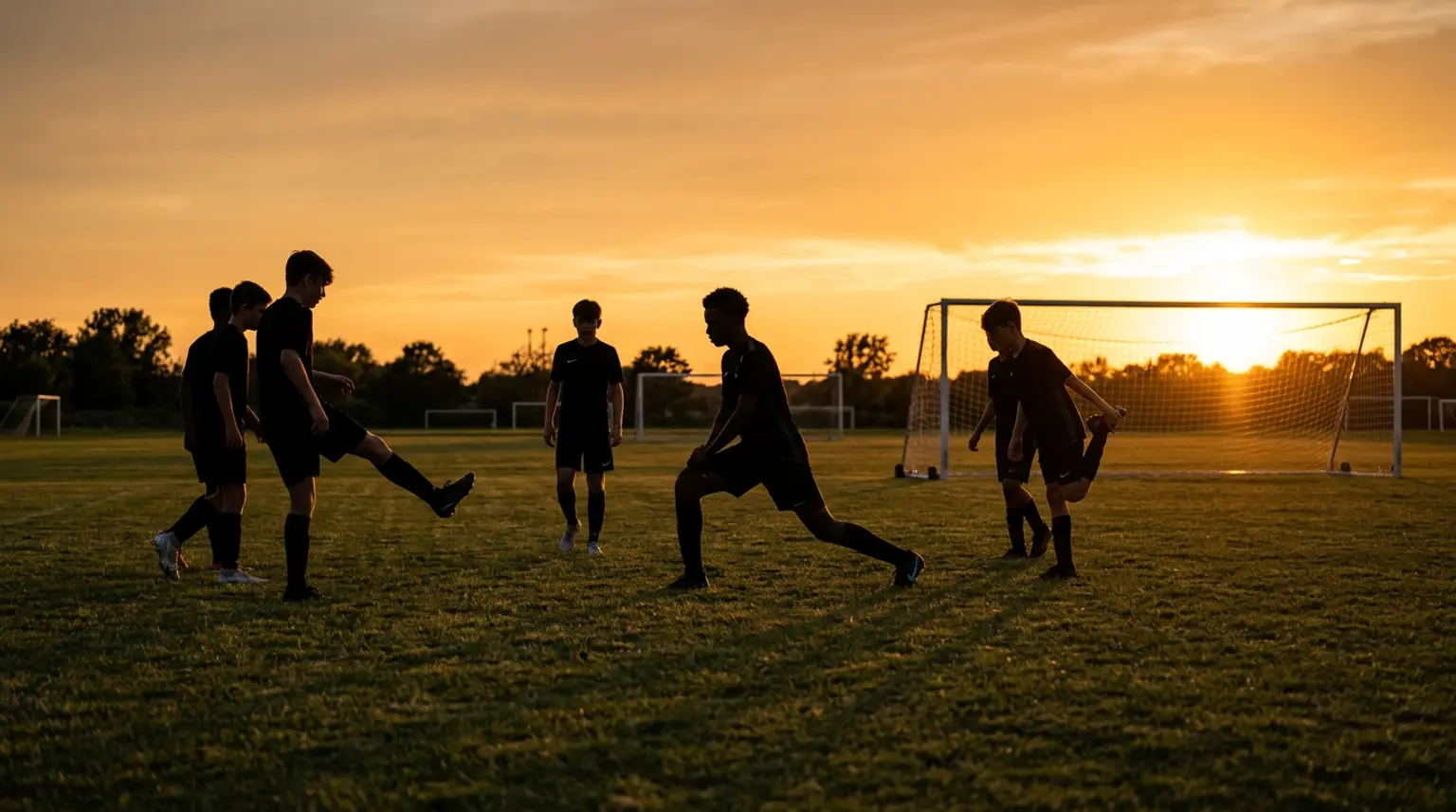
Soccer Warm-Up Routine for Youth Players Before Practice and Games
 Reviewed by Roman PivarnikUEFA Pro Licence · Technical Director, Slovak FA
A good soccer warm-up for youth players should last 10 to 15 minutes and include three phases: dynamic stretching, activation exercises, and ball work. Static stretching before practice or games is no longer recommended by sports science. Dynamic warm-ups that move the body through its full range of motion are the current standard and have been shown to reduce injury rates in youth soccer by 30 to 50 percent.
Warm-ups are the most skipped or rushed part of youth soccer. Kids want to get to the ball. Coaches want to maximize training time. But cutting the warm-up short is a false economy. It leads to more pulled muscles, more rolled ankles, and slower starts to training sessions. A proper warm-up also activates the nervous system, which means sharper reactions and better coordination once the real work begins.
Why are dynamic warm-ups better than static stretching?
For decades, youth sports warm-ups consisted of sitting on the ground and holding stretches for 20 to 30 seconds: hamstring stretches, quad pulls, butterfly stretch. Research over the past 15 years has changed this practice significantly.
Static stretching before exercise temporarily reduces muscle power and reaction speed. Multiple studies have demonstrated that holding a stretch for more than 30 seconds before activity decreases sprint performance and jump height. For a sport that demands explosive movement, this is the opposite of what a warm-up should accomplish.
Dynamic stretching, which involves moving the body through controlled ranges of motion, accomplishes what a warm-up is actually supposed to do. It raises the core body temperature, increases blood flow to working muscles, activates the nervous system for quick movements, and prepares joints for the specific movements they will perform during soccer.
The FIFA 11+ warm-up program, developed specifically for soccer, demonstrated injury reductions of 30 to 50 percent in youth and amateur players. It consists entirely of dynamic exercises, running drills, and balance work. No static stretching. This evidence base is why virtually every professional academy and national federation now uses dynamic warm-ups.
Note: Static stretching has its place. It is effective for improving flexibility when done after training or on rest days, when muscles are already warm. It just should not be done before activity.
What does a complete youth soccer warm-up look like?
Here is a 12-minute warm-up routine appropriate for players aged 8 and up. It works before both practice sessions and games.
Phase 1: Dynamic stretching (4 minutes)
These exercises raise heart rate and move major joints through their full range of motion. Do each exercise over a distance of about 15 to 20 yards.
Jogging: Light jog forward and back. This is not a sprint. The goal is gradually increasing heart rate and body temperature. (1 minute)
High knees: Drive each knee up to hip height while moving forward. Keep the upper body tall. Arms pump naturally. This activates the hip flexors and core. (30 seconds forward and back)
Butt kicks: Jog forward while flicking heels up toward the glutes. This warms up the quadriceps and knee joints. (30 seconds forward and back)
Leg swings: Stand on one leg (hold a partner or post for balance) and swing the other leg forward and backward in a controlled arc. 10 swings per leg. Then do lateral swings, swinging across the body. This opens up the hip joints, which are critical for kicking and changing direction.
Lateral shuffles: Face sideways and shuffle across the field, staying low with knees bent. Switch direction at the halfway point. This activates the groin and inner thigh muscles, which are heavily used in soccer and prone to strains. (30 seconds each direction)
Walking lunges: Step forward into a deep lunge, keeping the front knee over the ankle. Alternate legs for 10 to 12 reps. This stretches the hip flexors while activating the glutes and quads. (1 minute)
Phase 2: Activation exercises (3 minutes)
These exercises activate the muscles that stabilize the knees, ankles, and hips during cutting, jumping, and sprinting.
Bodyweight squats: 10 reps. Feet shoulder-width apart, sit back as if sitting in a chair, keep chest up. This activates the glutes and quads and prepares the knees for load.
Single-leg balance: Stand on one foot for 15 seconds, then switch. For older players, close the eyes or add a small knee bend. This activates the ankle stabilizers that prevent rolled ankles.
Carioca (grapevine): Move laterally, alternating crossing the trailing foot in front and behind. This activates the hip rotators and improves coordination for lateral movements. 15 to 20 yards each direction.
Sprints (progressive): Two short sprints at 50% effort, then two at 75%, then one at 90%. Each sprint should be 15 to 20 yards. This prepares the muscles for explosive effort without shocking the system with an all-out sprint while still cold.
Phase 3: Ball work (5 minutes)
This phase connects the physical warm-up to soccer-specific movements.
Dribbling in space: Each player with a ball, dribbling freely in a defined area. Encourage both feet, changes of direction, and different surfaces (inside, outside, sole). (2 minutes)
Passing in pairs: Two-touch passing at close range (5 to 10 yards). Right foot only for 30 seconds, left foot only for 30 seconds, then alternating. This warms up the passing muscles and sharpens first touch before the session begins. (2 minutes)
Ball mastery sequence: Toe taps, inside-inside, and sole rolls for 1 minute. This brings the focus inward and prepares the fine motor control needed for technical training.
After these 12 minutes, players should be warm, alert, and ready for the main session.
How should the warm-up change for different ages?
U8 and under: Keep it short (5 to 8 minutes) and game-like. Tag games, follow-the-leader dribbling, and simple movement games achieve the same physical goals as formal exercises while keeping young players engaged. Avoid complex exercises that require instruction time.
U10 to U12: The routine above works well. Players at this age can follow structured exercises and understand the purpose. Keep explanations short. Demonstrate rather than lecture.
U13 and up: Add intensity. The progressive sprints can reach full speed. Include agility ladder work or quick-feet patterns if equipment is available. Older players can also add partner resistance exercises like light pushing and pulling for balance activation. The warm-up can extend to 15 minutes.
Should players warm up before home training too?
Yes, but it can be shorter. A 3 to 5 minute warm-up before a home session is enough. Light jogging in place, leg swings, and a few bodyweight squats will prepare the body for ball work. Skipping the warm-up during home training is tempting because sessions are already short, but it increases the risk of minor strains, especially in cold weather.
Coach Roman Pivarnik, who holds the UEFA Pro Licence and designed FlickTec's training methodology, builds warm-up and cool-down phases into every session automatically. This means players never skip the parts that prevent injuries and aid recovery, even when training independently at home. Proper warm-ups also complement structured programs like HIIT soccer training, helping players recover from intense sessions. Get started with FlickTec's player training platform.
Planning sessions from your phone? We compared the best soccer coaching apps coaches actually use in 2026. See also how FlickTec works for coaches.
Frequently Asked Questions
How long before a game should players start warming up?
Start the warm-up about 20 to 25 minutes before kickoff. This allows 12 to 15 minutes for the full warm-up routine, plus a few minutes for team instructions and mental preparation. Players should feel warm but not fatigued when the whistle blows.
Is it bad to stretch before a soccer game?
Static stretching (holding a position for 20+ seconds) before a game can temporarily reduce muscle power and sprint speed. Dynamic stretching, which involves active movement through a range of motion, is the recommended approach. Save static stretching for after the game or on rest days.
Can warm-ups prevent injuries in youth soccer?
Yes. The FIFA 11+ warm-up program has been shown to reduce injuries by 30 to 50 percent in controlled studies of youth and amateur players. Consistent use of a proper dynamic warm-up is one of the most effective injury prevention tools available to youth soccer coaches.
What if my child's team does not do a proper warm-up?
If the team warm-up is insufficient, players can arrive 10 minutes early and do their own dynamic warm-up before joining the group. This is common practice at higher levels, where players take personal responsibility for their preparation. It is a good habit to start building young.
Should players cool down after training?
Yes. A 3 to 5 minute cool-down of light jogging and static stretching helps the body transition from high activity to rest. It reduces muscle soreness and aids recovery. Cool-downs are especially important after intense sessions or games.
A proper warm-up takes 10 to 15 minutes and costs nothing. It reduces injury risk, improves performance, and sets the tone for a focused session. It is one of the simplest upgrades any team or individual player can make to their training.
For guided training sessions that include built-in warm-ups and cool-downs, check out FlickTec, designed for youth soccer clubs and individual players.