Individual Development Plans (IDPs) in Youth Soccer: Unlocking Every Player's Potential
 Reviewed by Roman PivarnikUEFA Pro Licence · Technical Director, Slovak FA
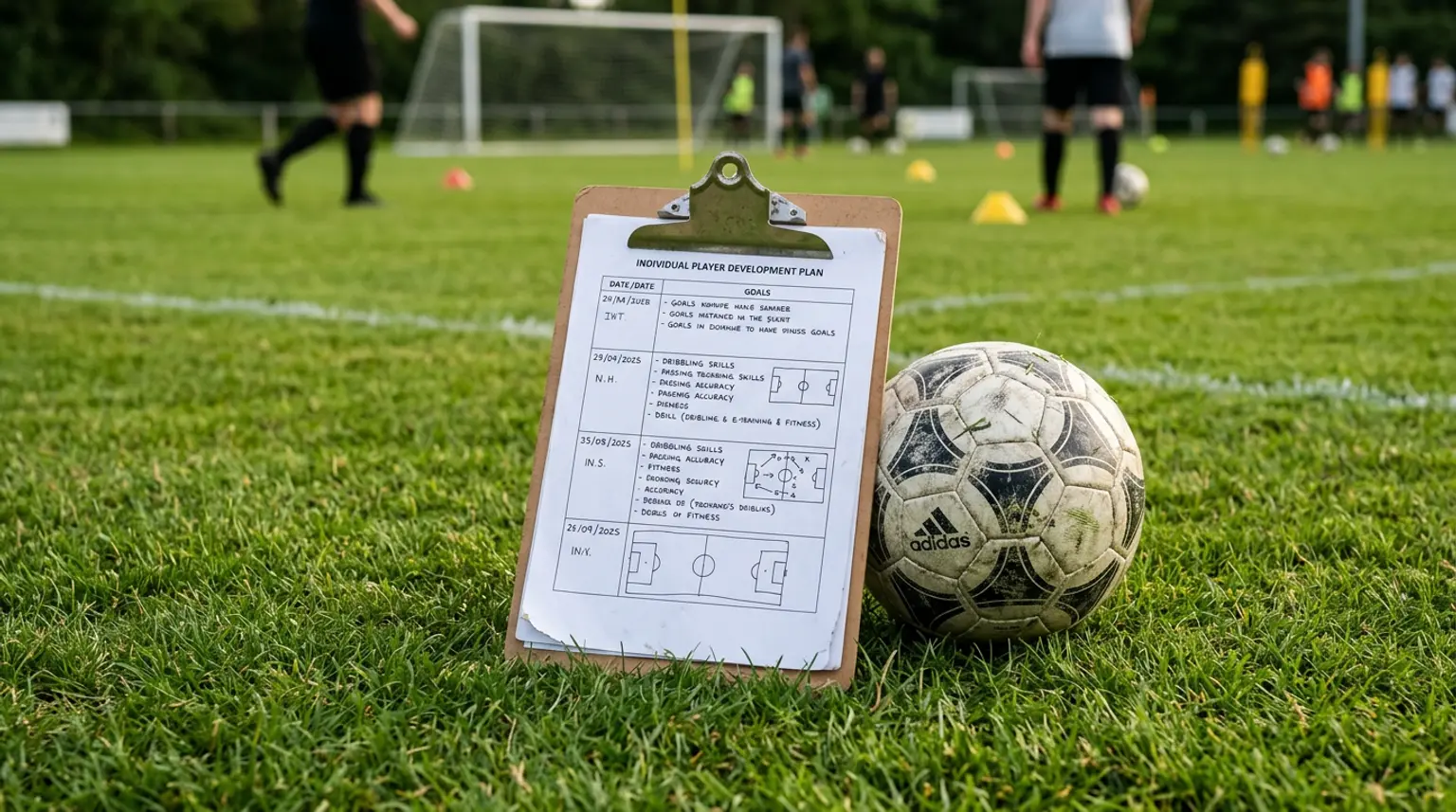
An Individual Development Plan serves as a personalized roadmap, helping players clearly understand their own path to improvement. These plans address technical skills, tactical awareness, physical fitness, and mental growth across all competitive levels, from grassroots to academy programs.
Effective IDPs incorporate dribbling and passing techniques, positional awareness, speed and strength training, and confidence-building exercises. Rather than replacing team practices, IDPs enhance them by allowing coaches to assign targeted individual exercises within sessions and at home.
Why do Individual Development Plans matter in youth soccer?
The approach emphasizes holistic development beyond field performance, fostering resilience and leadership qualities. Even grassroots clubs can implement IDPs simply by selecting one or two focus areas per player and establishing achievable goals within defined timeframes.
Clear, measurable objectives replace vague goals. For instance, achieving 20 accurate consecutive left-foot passes rather than simply "improve passing." This specificity enables coaches to effectively track progress while keeping players motivated through ownership of their development.
To understand the foundational concepts, read about what an Individual Development Plan (IDP) is in youth soccer and how it structures player growth.
How do personalized training plans improve player performance?
Personalized training yields faster skill advancement. Research demonstrates individualized programs produce superior performance improvements and greater skill retention compared to generic team drills.
IDPs address the varying developmental stages within youth teams, ensuring each player — from struggling beginners to advanced athletes — receives appropriate attention and realistic challenges suited to their current level.
What does an IDP look like at each age group?
Foundation Stage (U8-U11)
Emphasizes fundamental techniques and creative expression with parental involvement reinforcing skills through play.
Youth Development Stage (U12-U15)
Introduces structured IDPs with measurable metrics across multiple competency areas, with players actively participating in goal-setting and self-assessment.
Professional Development Stage (U16-U19)
Creates comprehensive, detailed plans aligned with professional standards, incorporating nutrition, recovery, and video analysis preparation.
How should coaches get started with IDPs?
Coaches should start simply:
- Select one or two skills per player to focus on
- Communicate clearly with players and parents about goals and progress
- Maintain regular progress check-ins — monthly or quarterly reviews keep momentum
- Celebrate achievements consistently to build confidence and motivation
- Keep activities engaging and enjoyable
When communicating with families, consider exploring strategies in how to communicate player development to parents to align on development goals and track progress together.
For coaches implementing IDPs at scale, technology platforms like FlickTec for coaches automate tracking and make individual development management practical across entire rosters.