How to Offer Individual Development Plans at Scale in a Youth Soccer Club
 Reviewed by Roman PivarnikUEFA Pro Licence · Technical Director, Slovak FA
Most youth soccer clubs can offer individual development plans to every player by combining structured home training with automated progress tracking, without requiring coaches to build custom plans from scratch. The biggest barrier to IDP adoption is not belief in the concept. It is the time it takes to create, deliver, and monitor a plan for every player on a roster of 200, 500, or 1,000 kids. The solution is a system that personalizes training automatically while giving coaches the visibility they need to guide each player's growth.
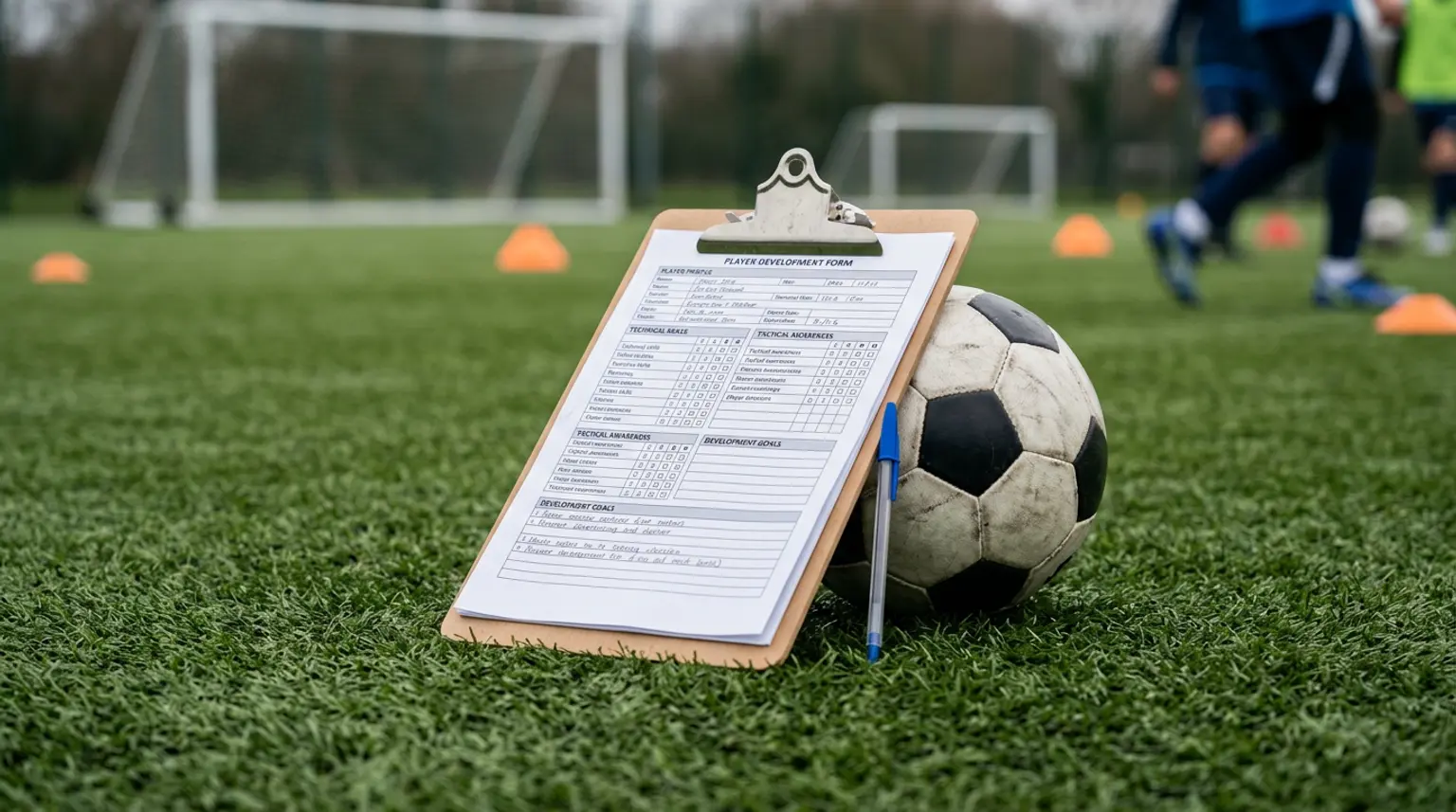
An individual development plan (IDP) is a personalized roadmap that identifies a player's strengths, areas for improvement, and specific goals over a defined period. In elite academies across Europe, IDPs are standard practice. In most American youth clubs, they exist for select players at best, and for no one at worst. The reason is simple: scale.
What is an individual development plan in youth soccer?
An IDP outlines what a player needs to work on, how they will work on it, and how progress will be measured. It typically covers technical skills (ball mastery, passing, finishing), physical development (speed, strength, stamina), and sometimes tactical and psychological areas.
The best IDPs are collaborative. The coach identifies focus areas, the player takes ownership of their training, and progress is reviewed regularly. Research from organizations like the English Football Association emphasizes that IDPs should be simple, with no more than 2 to 3 focus areas at a time. Overloading a player with 5 objectives is counterproductive. As one Premier League academy coach put it, sometimes 5 objectives are enough for 5 years, not 5 weeks.
For a deeper look at what IDPs are and why they matter, see our guide on what is an individual development plan in youth soccer.
Why can't most clubs offer IDPs to every player?
The math is the problem. A club with 40 teams and 15 players per team has 600 players. If a coach spends 20 minutes creating and reviewing an IDP per player per quarter, that is 200 hours of coach time per year, just for IDPs. Most volunteer and part-time coaches do not have that bandwidth.
The traditional approach requires coaches to manually assess each player, write up a plan, select exercises or drills, communicate the plan to the player and parent, and then follow up on progress. Multiply that by hundreds of players and it collapses. Clubs end up offering IDPs to their top team or travel players only, which contradicts the idea that every child deserves a development pathway.
How do you scale IDPs without burning out coaches?
The answer is automation of the repetitive parts, while keeping the human coaching input where it matters most.
Step 1: Automate the training delivery. Instead of coaches manually selecting drills for each player, use a platform that generates personalized training sessions based on the player's age, position, season phase, and training load. FlickTec does this automatically. A coach assigns training in about 20 seconds, and the app generates sessions tailored to each individual player. The 500+ video exercises, designed by Coach Roman Pivarnik (UEFA Pro Licence, former UEFA Champions League coach, Technical Director of the Slovak Football Association), cover everything from ball mastery and HIIT conditioning to position-specific drills and recovery.
Step 2: Let tracking happen passively. When players complete training on a platform that records their activity, coaches get visibility without chasing spreadsheets. They can see who trained, how often, what categories they worked on, and how their consistency trends over time. This data becomes the foundation for the IDP conversation.
Step 3: Focus coach time on the conversation, not the paperwork. With automated training and passive tracking in place, the coach's role shifts from plan creation to player guidance. A quarterly 10-minute conversation with each player, reviewing their training data and adjusting 2 to 3 focus areas, is realistic even for coaches with large rosters. The technology handles the daily delivery. The coach handles the relationship and the insight.
What should an IDP include at the youth level?
Keep it simple. A youth IDP should include:
A brief assessment of the player's current strengths (1 to 2 areas). This gives the player confidence and something to build on.
Two to three focus areas for improvement over the next 8 to 12 weeks. These should be specific and observable. "Improve weak foot confidence" is better than "get better at dribbling."
A training approach for each focus area. This is where a structured home training platform is powerful. Instead of telling a player to "work on your left foot," the system delivers daily sessions that include left-foot exercises appropriate for their age and level.
A review date. Even a simple check-in at the midpoint and end of the period keeps the plan alive. Without a review, IDPs become paperwork that sits in a binder.
How does technology make IDPs practical for every player?
Technology bridges the gap between the ideal (every player has a personalized plan) and the reality (coaches have limited time). Here is what that looks like in practice:
Personalized training generation. The platform adapts sessions to the individual. A U10 striker and a U14 center back receive different training, automatically. Age, position, season phase, and recent training load all factor into what the player sees each day.
Progress visibility for coaches. A coach dashboard shows every player's training completion, consistency streaks, and category breakdown. Before a quarterly IDP review, the coach can pull up a player's profile in seconds and see exactly what they have been working on and how often.
Player ownership. When players can see their own progress, track their streaks, and earn points through a system like FlickTec's FlickPoints, they take ownership of their development. This is a critical part of IDP success. The plan cannot live with the coach alone. The player has to feel invested.
Parent visibility. Parents who can see their child's training activity and progress are more likely to support home practice and more likely to feel the club is delivering value. This directly supports club retention.
What does a scaled IDP process look like in a real club?
Here is a realistic quarterly IDP cycle for a club using structured home training:
Week 1 of the quarter: Coaches review each player's training data from the previous period. They identify 2 to 3 focus areas based on what they observe in training, games, and the app data. This takes 5 to 10 minutes per player.
Week 1 to 2: Coaches have brief conversations with players (and parents for younger age groups) about the focus areas. The app continues delivering daily personalized training that aligns with these areas. For coaches looking to formalize this approach, how to implement individual development plans at your soccer club offers a complete implementation guide.
Weeks 3 to 10: Players train at home using the app. Coaches monitor dashboard data weekly, flagging players whose training drops off. A quick message to a player who missed a week is more impactful than a formal review.
Weeks 11 to 12: End-of-quarter review. Coach pulls up each player's data, notes improvement trends, and sets the stage for the next quarter's focus. The cycle repeats.
This process does not require 200 hours of coach time. With automated training and passive tracking, a club of 600 players can run meaningful IDPs with roughly 100 to 120 hours of total coach time per year, spread across all coaching staff.
Frequently Asked Questions
Can volunteer coaches run IDPs effectively?
Yes, if the system does the heavy lifting. When training delivery and tracking are automated, a volunteer coach's role is to have brief, focused conversations with players about their goals. That is something any coach who cares about development can do, regardless of their license level.
At what age should clubs start offering IDPs?
Formal IDPs work best from U10 and up, when players begin to understand goal-setting. For younger age groups (U6 to U9), the focus should be on exposure to many movement patterns and fun. Structured home training can still be valuable at these ages, but the IDP conversation is simpler: "practice your ball touches every day and have fun."
How often should IDPs be reviewed?
Quarterly reviews (every 8 to 12 weeks) strike the right balance. More frequent formal reviews create administrative burden. Less frequent ones let players drift without feedback. Informal check-ins between reviews, such as a coach commenting on a player's training streak, keep the plan alive.
Do IDPs work for recreational players or only competitive teams?
IDPs benefit any player who wants to improve, regardless of competitive level. The depth of the plan may differ (a recreational player might focus on one skill area while a competitive player works on three), but the principle is the same: identify what to work on, provide a way to work on it, and track progress.
Does offering IDPs help with club registration and retention?
Absolutely. Families who can see personalized attention and measurable progress are significantly more likely to renew. IDPs turn a generic club experience into a personalized one. For more on this connection, see our post on how to increase registration and retention.
Individual development plans are one of the most powerful tools in youth soccer, and technology has made them practical for every club, not just elite academies. Automate the training delivery, track progress passively, and focus your coaches on the conversations that matter. Every player in your club deserves a development pathway.
To see how FlickTec makes IDPs scalable for clubs of any size, visit FlickTec for coaches.