How to Transition Players from Small-Sided to 11v11 Soccer
 Reviewed by Roman PivarnikUEFA Pro Licence · Technical Director, Slovak FA
The transition from small-sided formats (7v7 or 9v9) to 11v11 soccer is the most significant format change in youth soccer. It typically happens between U11 and U13. The field nearly doubles in size, the number of players increases by 40 to 60 percent, and the game demands positional understanding, longer passing range, and physical endurance that small-sided formats do not require. Coaches who prepare players for this transition produce teams that adapt quickly.
US Soccer's development framework transitions players to 11v11 at U13, with many clubs beginning at U12 through 9v9 intermediate formats.
What changes when players move to 11v11?
The field is much bigger
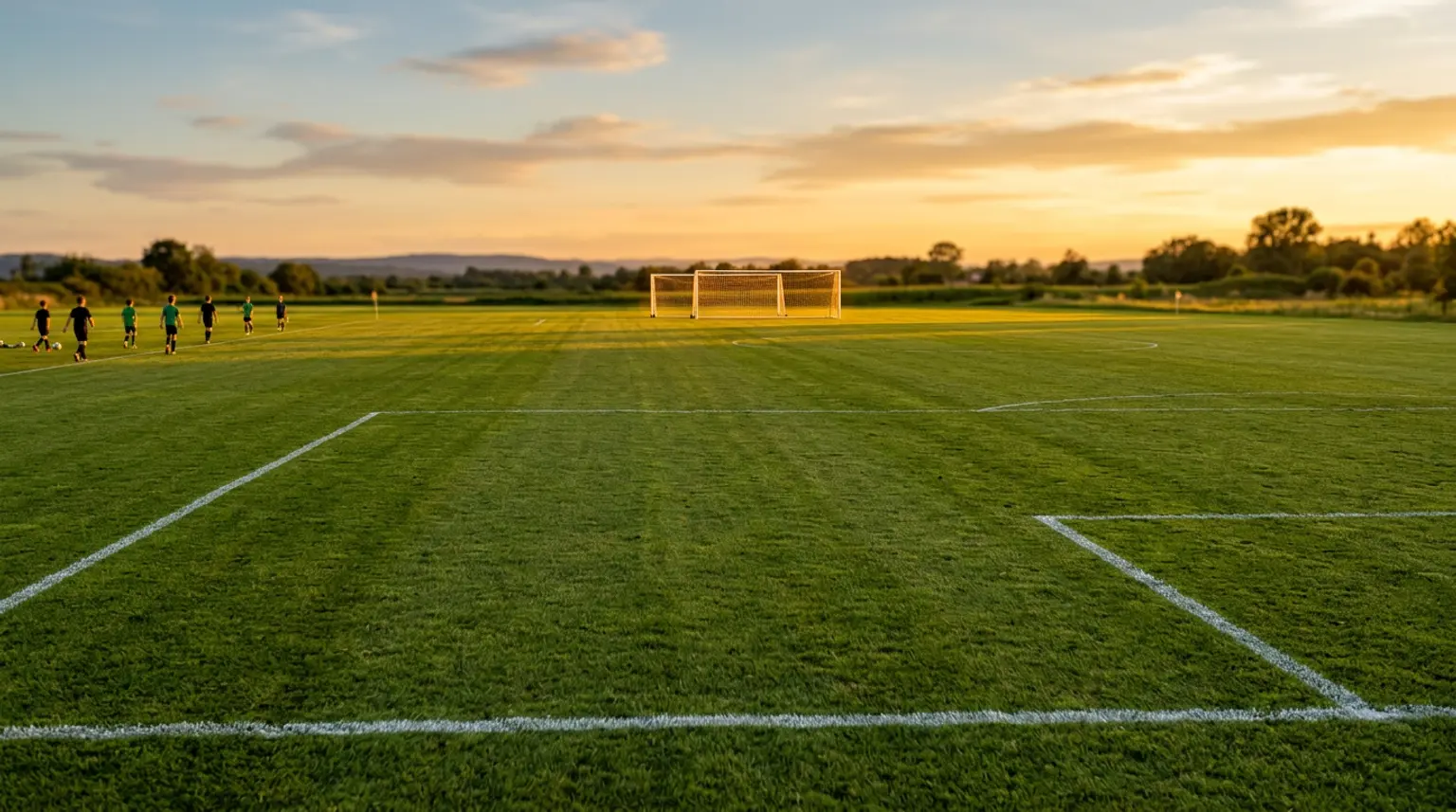
A 7v7 field is approximately 55 by 35 yards. A full 11v11 field is 100 to 120 by 55 to 75 yards. That is roughly 4 times the playing area. Players who were always close to the ball in 7v7 suddenly find themselves 40 yards from play.
What this means: Players need to learn how to operate when they are far from the ball. Off-the-ball movement, scanning, and positional discipline become essential.
Passing range must increase
In 7v7, most passes are 5 to 15 yards. In 11v11, effective play requires 15 to 30 yard passes regularly. Players who cannot pass accurately beyond 15 yards will struggle.
Positional roles become defined
In 7v7, positions are fluid. In 11v11, players have specific positional responsibilities within a formation. Understanding roles and relationships between positions is a new cognitive challenge.
Physical demands increase
More field means more running. Players at U13 cover 5 to 7 km in a game, a significant increase from 2 to 3 km in 7v7.
How should coaches prepare players?
6 to 12 months before 11v11: Build the bridge
Expand the field gradually. Play 7v7 on an oversized field to force longer passes and more spatial awareness.
Introduce medium-range passing. Add 15 to 25 yard passing exercises to every session. Partner passing at increasing distances. Driven passes to targets.
Teach scanning and off-the-ball positioning. "Before you receive, look over your shoulder." Practice this in every first touch drill.
Begin positional education through SSGs. A 5v5 with fixed wide players teaches width. A 6v4 overload teaches building through thirds.
During the transition: Coach the big picture
Start with a simple formation. 4-3-3 or 4-4-2 provides clear structure. Each player needs to understand three things: where to be with the ball, where to be without it, and who is next to them.
Play practice games at 11v11 early. Schedule friendlies before competitive season. The first game will feel chaotic. That is expected.
Address the "lost on the field" problem directly. Some players who thrived in 7v7 struggle because they feel disconnected. Help them understand positioning.
Continue position-specific individual training. A player developing as a central midfielder should include medium-range passing in home training. FlickTec offers position-specific training plans within its 500+ exercise library designed by Coach Roman Pivarnik (UEFA Pro Licence, 25+ years professional coaching).
Common mistakes during the transition
Jumping straight to complex tactics. Start with basic shape. Add layers gradually over weeks.
Neglecting technical maintenance. Ball mastery and first touch work should continue at every age. A 5 to 10 minute technical warm-up should remain in every session.
Locking players into positions too early. Even during the transition, players should experience multiple positions, especially in training.
Expecting the transition to be instant. Most players need 2 to 3 months of regular 11v11 play to feel comfortable.
How does the transition affect players by position?
Central midfielders often adapt fastest because they were involved in most play.
Wide players face the biggest adjustment because wide areas barely exist in 7v7.
Center-backs need to learn to deal with space behind them.
Strikers need to learn patience. They may go 5 to 10 minutes without a touch.
Goalkeepers face a dramatically larger goal requiring adjusted positioning and improved distribution.
Training Continuity During Transition
Continue using small-sided games in training after moving to 11v11. They remain the most effective format for developing technique and decision-making at any age. Use them during the week for skill development and reserve specific tactical sessions for 11v11 shape and positioning work.
Frequently Asked Questions
How long does the transition to 11v11 typically take?
Most players need 2 to 3 months of regular 11v11 play to feel comfortable. Full adaptation typically takes a full season.
Should the transition happen at U12 or U13?
Both work. Some clubs use 9v9 at U11-U12 as an intermediate step. The 9v9 format is a gentler bridge to full 11v11.
My team looks great in training but falls apart in 11v11 games. Why?
In training, support is always close. In 11v11, distances are greater and positional discipline matters more. Train at 11v11 dimensions more frequently.
Should I still use small-sided games after moving to 11v11?
Absolutely. Small-sided games remain the most effective training format for technique and decision-making. Use them for development and practice 11v11 shape separately.
The transition from small-sided to 11v11 is not just a change in numbers. It is a change in how the game is played. Prepare deliberately: expand the field gradually, introduce positional concepts early, build passing range, and give players time to adapt.
For position-specific training that prepares players for 11v11 demands, explore FlickTec for coaches.