How to Play Soccer for Kids: A Parent's Complete Guide
 Reviewed by Roman PivarnikUEFA Pro Licence · Technical Director, Slovak FA
Kids can start learning soccer from age 4 to 5 with simple ball play and basic movement, and most are ready for organized team training by age 6 to 7. Learning to play soccer does not require expensive equipment, prior experience from parents, or enrollment in an elite club. A soccer ball, a small patch of grass, and a willingness to play are enough to get started. The foundational skills (touching the ball, running with it, kicking it toward a target) are simple enough for any child to begin developing at home.
Soccer is the most popular youth sport in the United States, with over 3 million registered youth players. It is also one of the most accessible. Unlike sports that require specialized equipment or facilities, soccer can be played almost anywhere with almost nothing. This makes it an ideal first sport for kids.
What age should kids start playing soccer?
Ages 4 to 5: Kids can begin informal ball play at home. Rolling the ball, chasing it, kicking it against a wall, and playing simple games with a parent or sibling. This is not structured training. It is play that builds basic coordination and a positive association with the ball.
Ages 5 to 6: Many clubs offer introductory programs (sometimes called "micro soccer" or "soccer tots") with shortened fields, small goals, and a focus on fun. Sessions are typically 30 to 45 minutes and emphasize running, kicking, and basic team concepts like passing to a friend.
Ages 6 to 7: Most children are ready for recreational league play. Teams are small (4v4 or 5v5), fields are small, and the emphasis is on participation and enjoyment. Every child should play every position at this age.
Ages 8 to 10: Players begin developing real technical skills. This is when structured practice becomes valuable, both in team sessions and at home. Ball mastery, coordination, and basic passing become the focus.
There is no "too late" to start soccer. Children who begin at 9 or 10 can catch up quickly if they practice consistently, especially with structured home training.
What equipment does a kid need to start?
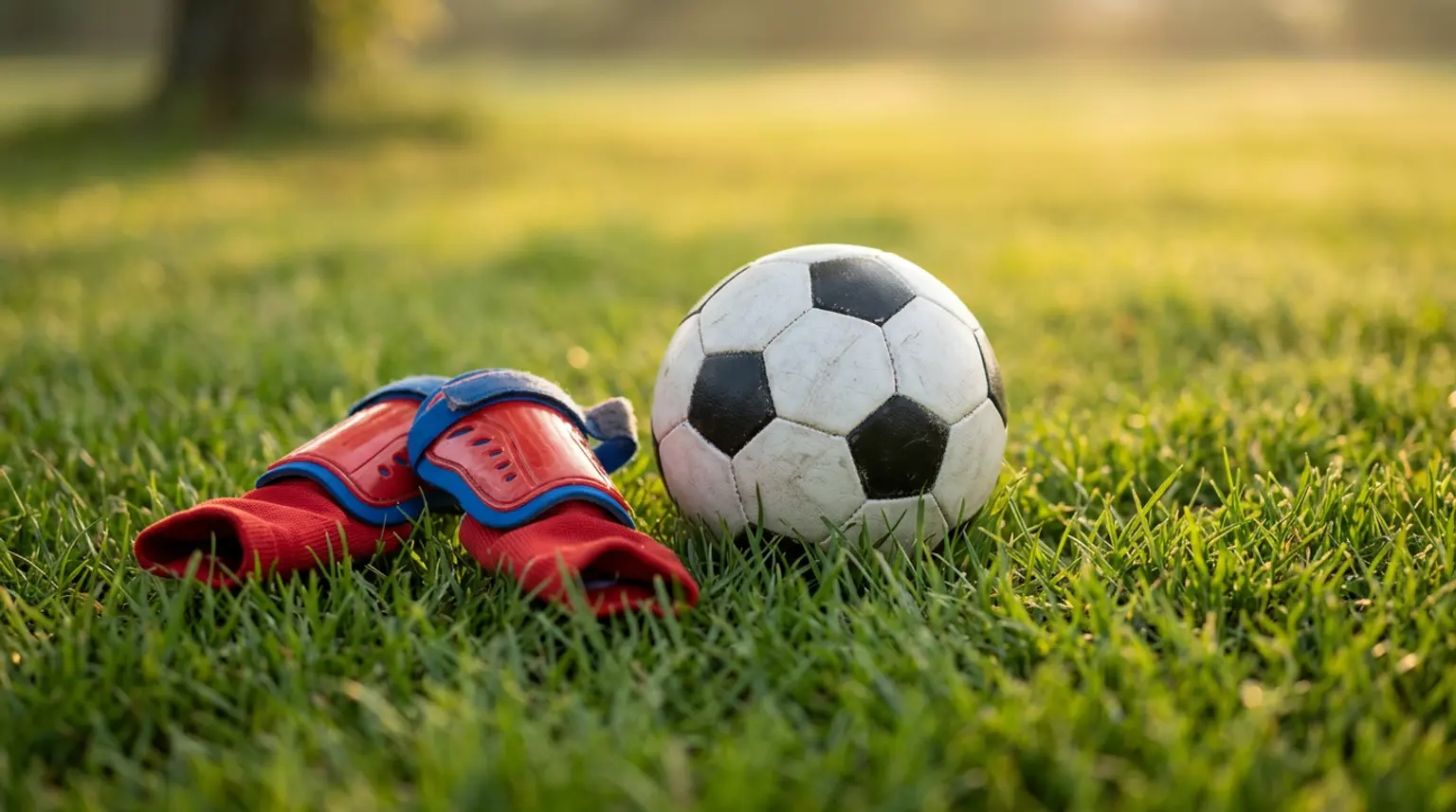
A soccer ball is the only essential item. Use the right size: size 3 for ages 4 to 7, size 4 for ages 8 to 12, size 5 for ages 13 and up.
Soccer cleats are helpful for playing on grass but not required for beginners. Any athletic shoes work fine for early practice.
Shin guards are required for organized play. Inexpensive youth shin guards cost $5 to $15 and provide basic protection.
That is it. No special training equipment, no premium gear, no technology is required to start. As a child progresses, items like cones for dribbling practice, a foam roller for recovery, and a training app for structured home sessions become useful additions.
What skills should kids learn first?
Dribbling (moving with the ball)
The first skill most kids develop is simply running with the ball at their feet. Start by having the child push the ball forward gently with the inside of their foot and jog to it. As they become comfortable, they can use the outside of the foot, the sole, and the laces.
The goal at the beginning is not technique. It is comfort. A child who is comfortable running with a ball at their feet has the foundation for everything else.
Passing (kicking to a partner or target)
Teach passing with the inside of the foot: the flat, wide surface that provides the most accuracy. Stand 5 to 8 feet apart and pass back and forth. Emphasize striking the middle of the ball and pointing the toe of the kicking foot sideways.
For kids without a partner, passing against a wall is equally effective and provides unlimited repetitions.
Shooting (kicking toward a goal)
Shooting uses the laces (top of the foot) for power. Point the toe down, strike through the middle or slightly above center of the ball, and follow through toward the target. Use a small goal, a gap between two cones, or any defined target.
At young ages, accuracy matters more than power. Encourage placement over force.
Receiving (controlling the ball)
When a ball comes to a player, they need to stop it and bring it under control. Teach the child to cushion the ball with the inside of the foot, pulling the foot back slightly on contact to absorb the speed. The ball should stop within one step of the body.
This is the skill that is hardest to develop without practice. A player with a good first touch controls the game. A player with a poor first touch is always chasing the ball. This is why consistent home training matters so much.
How can parents help kids learn soccer at home?
Play with them. You do not need to be a soccer coach. Kick the ball back and forth. Play keep-away. Set up a mini goal and take turns shooting. The time spent touching the ball with a parent builds both skill and love of the game.
Keep it short and fun. 10 to 15 minutes of ball play is more valuable than a forced 45-minute session. End while the child still wants more.
Encourage both feet. From the very first time a child kicks a ball, encourage them to use both their right and left foot. This is much easier to develop early than to correct later.
Do not coach too much. Let the child explore and experiment. A 5 year old kicking the ball with their toe is fine. A 6 year old trying to dribble and losing the ball constantly is fine. Over-correcting at this age creates hesitation and removes the fun.
Use a training app when they are ready. From age 7 to 8, kids can follow guided training sessions with video demonstrations. FlickTec generates personalized daily sessions for young players, with exercises designed by Coach Roman Pivarnik (UEFA Pro Licence, 25+ years at the highest European levels). The app's gamification (FlickPoints, streaks, leaderboards) keeps kids engaged without parental pressure.
How do kids progress from beginner to competitive player?
The progression is not about jumping to an elite club as fast as possible. It is about consistent ball contact over time.
Year 1 to 2: Learn the basics through play and recreational leagues. Touch the ball every day, even for a few minutes. Build comfort and enjoyment.
Year 2 to 3: Join a club team if interested. Begin structured home training (10 to 15 minutes, 3 to 4 times per week). Develop ball mastery and both-foot comfort.
Year 3 to 5: Increase home training volume and structure. Begin working on passing accuracy, dribbling under pressure, and physical conditioning. This is where daily home training creates separation from peers.
Year 5+: Consider competitive or select programs if the player is motivated. Training becomes more position-specific, tactically oriented, and physically demanding. Individual development plans guide focused improvement.
The players who develop fastest are not always the most talented. They are the most consistent. A child who touches the ball 15 minutes every day for 3 years accumulates over 270 hours of individual practice. That volume, combined with team training and games, produces confident, skilled players.
Frequently Asked Questions
Is my child too old to start soccer?
No. Children can start soccer at any age. Players who begin at 8, 9, or even 10 can catch up quickly with consistent practice, especially if they add structured home training alongside team sessions. The most important factor is enthusiasm for the game.
How do I choose the right soccer club for my child?
Look for a club that prioritizes development over winning at young ages, provides qualified coaching, communicates with parents about player progress, and creates a positive environment. Ask about the coach-to-player ratio, the club's development philosophy, and whether they offer tools like home training platforms.
Should my child play other sports alongside soccer?
Yes, especially before age 12. Multi-sport participation develops general athleticism, prevents overuse injuries, and keeps children mentally fresh. Soccer-specific home training (10 to 15 minutes) can easily coexist with other sports.
What if my child does not enjoy soccer?
Do not force it. Try different sports and activities. If they enjoy ball play at home but dislike organized practice, the issue may be the team environment rather than the sport itself. Some children thrive in less structured settings like pickup games or home training before they enjoy formal team sessions.
How much does youth soccer cost?
Recreational leagues typically cost $50 to $200 per season. Club or competitive programs range from $1,000 to $5,000+ per year depending on the level, location, and travel requirements. Home training with an app is a fraction of these costs and provides daily development that multiplies the value of every dollar spent on organized play.
Learning soccer starts with a ball and a willingness to play. No special talent, no expensive equipment, and no coaching license required from parents. Give your child daily ball contact, let them enjoy the process, and the skills develop naturally. The rest (positions, tactics, competition) comes later.
FlickTec provides daily guided training for players of all ages and levels. Start at flicktec.io/players.