How Can Foam Rolling Elevate Your Soccer Training Experience?
 Reviewed by Roman PivarnikUEFA Pro Licence · Technical Director, Slovak FA
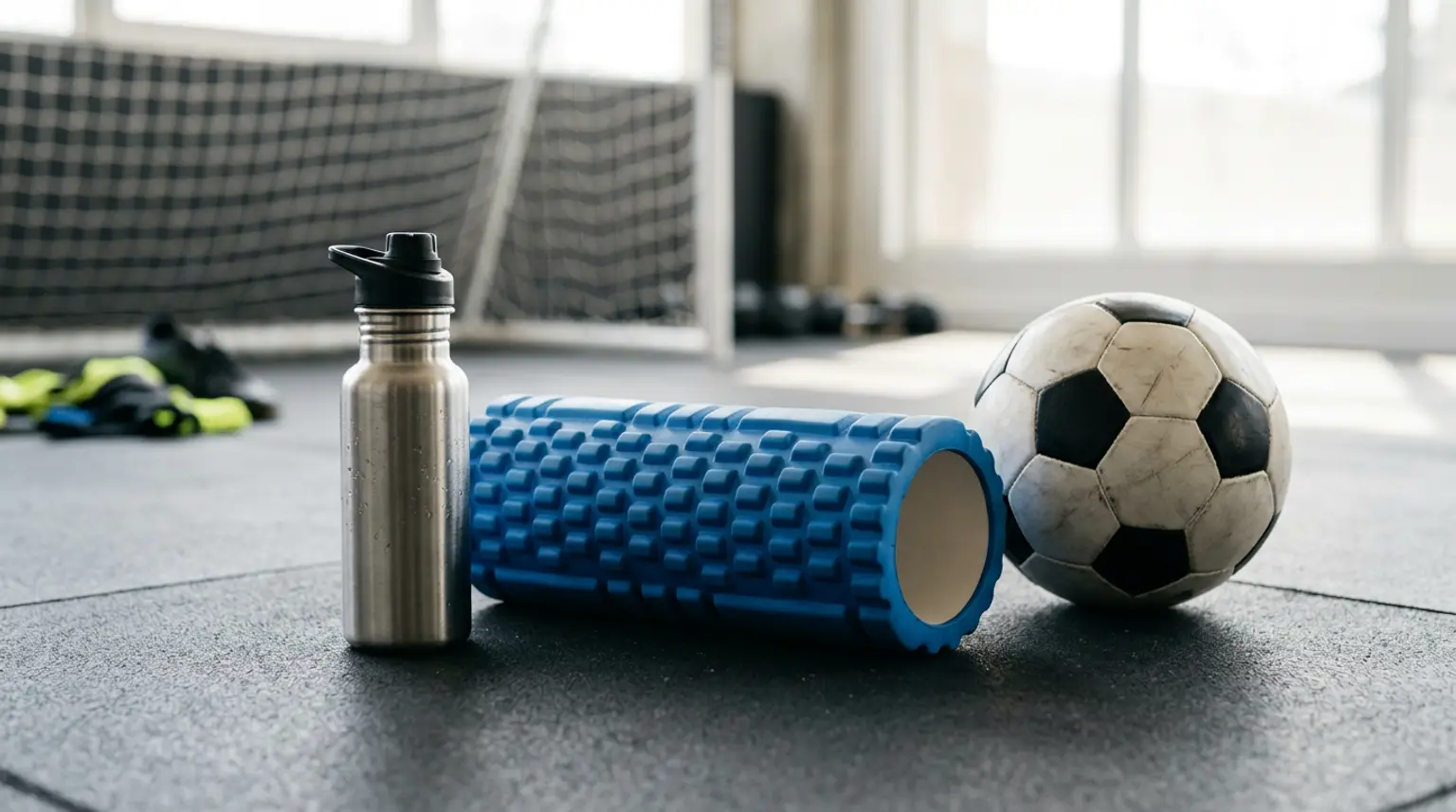
Contemporary soccer demands attention to technical skills, physical conditioning, and strategic planning. However, one essential element frequently overlooked is foam rolling — a self-massage technique using a compressed foam cylinder to relieve muscle tightness, trigger points, and fascial adhesions (also called self-myofascial release or SMR).
Foam rolling offers multiple advantages for soccer athletes across all ages and abilities. This affordable, portable tool lasts for years and provides lasting benefits beyond individual training sessions.
How does foam rolling help before training?
Pre-workout foam rolling warms muscles and reduces muscle density, preparing them for subsequent activities and potentially enhancing overall performance. When paired with stretching, it amplifies range of motion, enabling more flexible and efficient movement execution.
How does foam rolling help after training?
Post-training foam rolling addresses delayed-onset muscle soreness (DOMS) — pain and stiffness occurring hours or days after intense exercise. This technique facilitates faster recovery and prepares players for upcoming sessions. Foam rolling is an excellent complement to structured recovery and rest day practices.
Which muscle groups should soccer players target?
Soccer players should prioritize rolling these areas:
- Quads — heavily used in shooting and sprinting
- Hamstrings — critical for acceleration and deceleration
- Hip flexors — essential for range of motion
- Calves — important for endurance and agility
- IT band — stabilizes the knee during lateral movement
- Upper and lower back — supports posture and core engagement
Important: Avoid rolling smaller joints like knees, elbows, and ankles to prevent injury. Learn how foam rolling fits into comprehensive injury prevention strategies for youth players.
How should you choose a foam roller?
When selecting a foam roller, consider three factors:
- Density — softer for beginners, denser as you progress
- Surface texture — smooth for uniformity, textured for targeted massage
- Size — medium to long rollers offer optimal stability and versatility; standard diameter ranges from 5-6 inches
Why should foam rolling be part of every training routine?
Foam rolling transforms training regimens through enhanced recovery, injury prevention, and workout efficiency. Its simplicity and adaptability make it accessible for all practitioners. Explore FlickTec's player training programs for guided sessions that incorporate foam rolling into comprehensive training protocols.